
Coming Back to Yourself
By Cathie Ostapchuk
This morning I sat across from a friend over coffee. One of those conversations that begins with catching up and somehow ends up in the deeper places.
She's an exceptional leader. The kind of woman who can walk into a room and bring clarity, wisdom, and calm. The kind of woman who has spent years investing in others. As we talked, we found ourselves reflecting on different seasons of leadership and life, and a surprising theme emerged.
We were both remembering times when we had become smaller than we really were.
Not because someone explicitly told us to shrink. Not because we lacked gifts or opportunities. Not because God had somehow withdrawn His calling.
We simply stopped believing that what we naturally brought to the table was wanted.
For one of us, it was feeling too much. Too strong. Too outspoken. Too intense. For the other, it was feeling not enough. Not strategic enough. Not polished enough. Not experienced enough. Different stories, but remarkably similar outcomes.
We adjusted. We edited ourselves. We learned to read rooms and manage perceptions. We became careful. Measured. Less likely to take risks. Less likely to say the thing we were really thinking. Less likely to bring the full weight of our experience, perspective, and voice.
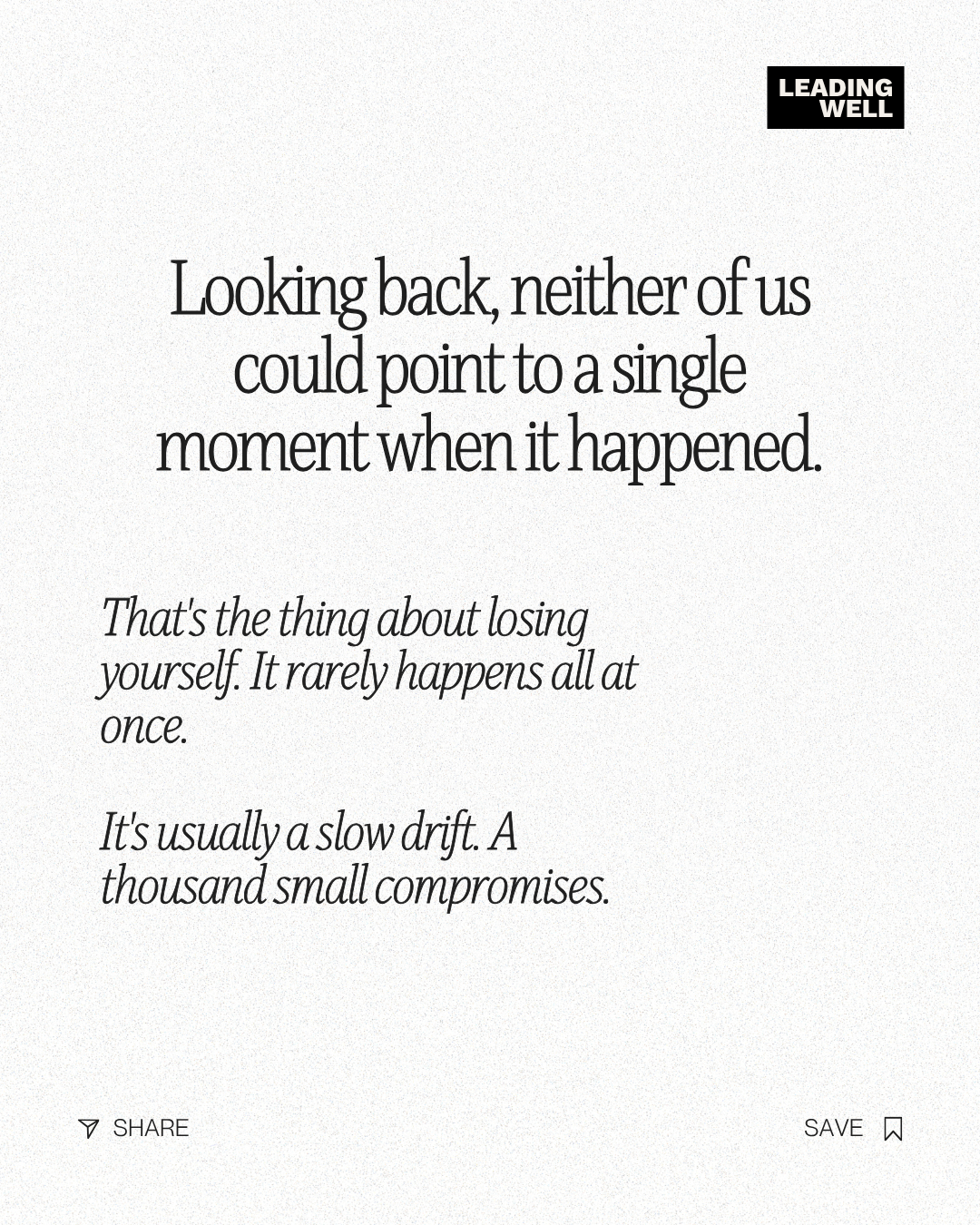
Looking back, neither of us could point to a single moment when it happened.
That's the thing about losing yourself. It rarely happens all at once.
It's usually a slow drift. A thousand small compromises.
Years of carrying responsibilities, meeting expectations, navigating relationships, leading organizations, caring for families, and trying to be who everyone else needs you to be.
Until one day you find yourself asking a question you never expected to ask:
"When did I stop feeling like myself?"
That question has been sitting with me ever since.
It's also one of the reasons we created the first Gather Circles module, You, Actually.
As I was writing the curriculum, I kept returning to a phrase in Luke 15 that has always captured my imagination. The prodigal son is sitting in the far country, surrounded by the consequences of his choices, and Scripture says, "When he came to himself..." (Luke 15:17).
Before he returned home, he came to himself.
Before restoration came recognition.
Before reconciliation came remembering.
He remembered who he was.
The curriculum suggests something that has resonated deeply with women: perhaps the far country is not always rebellion.
Sometimes the far country is simply the place we end up when we lose touch with ourselves.
It is the years spent performing.
The years spent comparing.
The years spent carrying expectations that were never ours to carry.
The years spent becoming who everyone else needed us to be while slowly forgetting who God created us to be.
As I've prayed about sharing this material, I am wondering how differently women may respond.
For some, this will be a recovery story.
They know exactly when they lost themselves.
For others, especially younger leaders, it is a prevention story. They are learning early what many of us learned much later: that leadership without self-awareness is dangerous, and that if you do not know who you are, the world will gladly tell you.
The invitation of Jesus is not to become someone else.
It is not to become more impressive.
More productive.
More influential.
The invitation is to become fully who He created you to be.
That sounds simple. It isn't.
Because becoming yourself requires courage. It requires telling the truth about where you've been hiding. It requires taking off armour that doesn't fit. It requires resisting the temptation to compare your calling, your voice, and your journey with someone else's.
And perhaps most importantly, it requires believing that the woman God created is already enough for Him to work with.
As my friend and I finished our coffee this morning, neither of us had solved all the questions we were carrying. But we both left reminded of something important.
The world doesn't need us to become someone else.
It needs us to become ourselves.
Or perhaps, to borrow the language of Luke 15, it needs us to come back to ourselves.
Because there are people waiting on the other side of your obedience, your voice, your gifts, and your leadership.
And they don't need a carefully edited version of you.
They need you, actually.
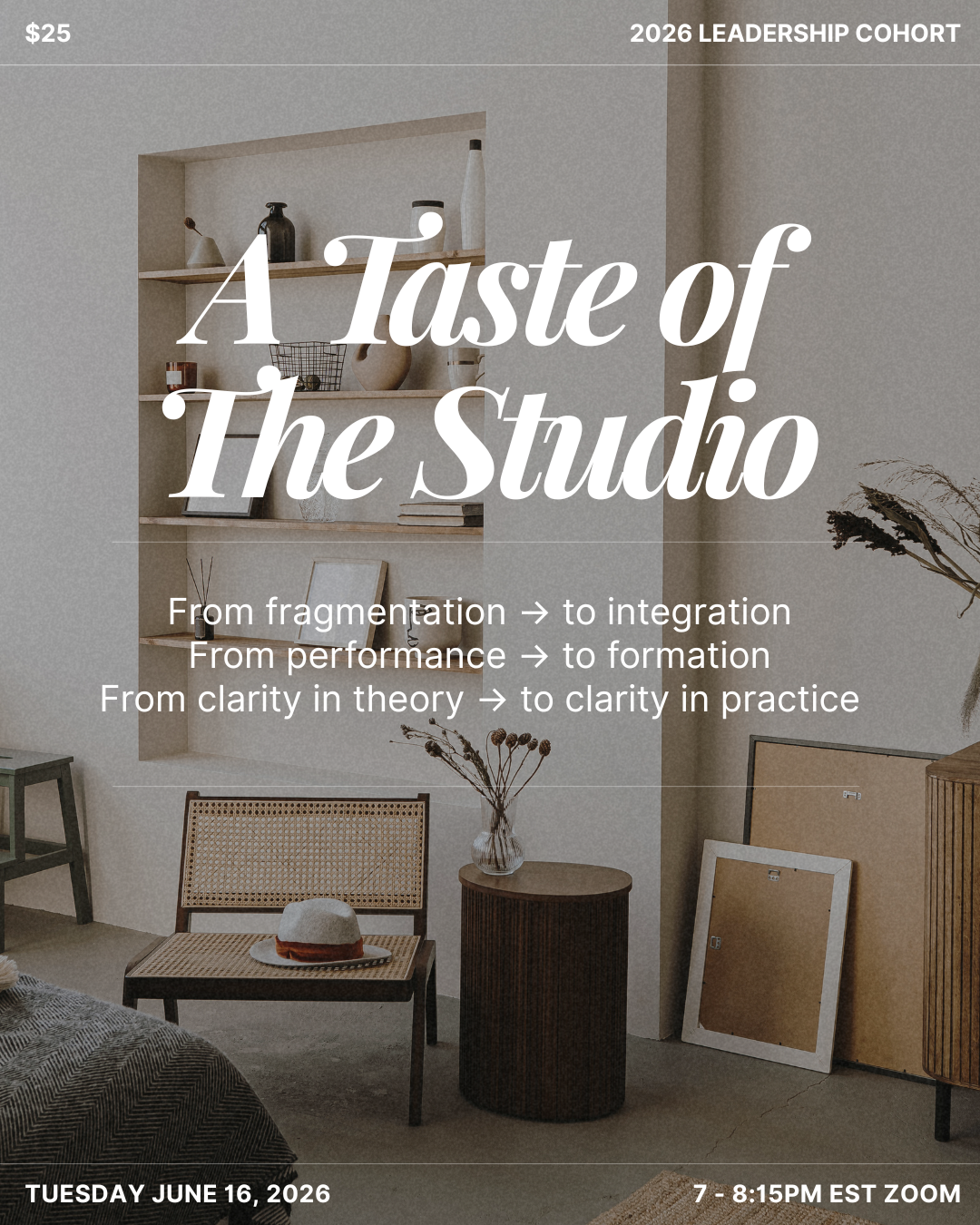
If this resonates with you, I'd love to invite you to join me next week for A Taste of The Studio or Everything You Need to Know About Gather Circles.
These conversations are for women who are ready to live and lead from wholeness rather than performance, and who suspect there may be a way back to themselves.
Because maybe the most important leadership work you'll ever do isn't learning how to lead.
Maybe it's remembering who you are.
There comes a moment in leadership where what got you here…
is no longer enough to carry you forward.
You’re still leading.
Still showing up.
Still holding space for others.
But underneath it all, something feels… fragmented.
Unclear.
Tired in a way that rest alone doesn’t fix.
The Studio was created for that moment.
Not as another leadership program to consume—
but as a space to be formed.

Small circles.
Honest conversations.
Grounded in Scripture.
Designed for real life.
This isn’t another program to keep up with.
It’s a space to:
tell the truth about your life
reconnect with what matters most
grow in faith in a way that actually touches real life
move forward with clarity and intention